Most personal libraries are archives of books read once. There is nothing wrong with that, but a small shelf of books you return to does something a large archive cannot.
The rereading test
Before a book earns permanent space, ask whether you would open it at random and get something. Books structured as arguments generally fail this test — you already know the argument. Books structured as collections generally pass it.
This is why aphoristic and notebook-form works dominate most people’s reread shelves.
Aim for eight to fifteen titles
Small enough that you know what is on it. Large enough for variety in mood. Beyond about twenty, you stop reaching for individual books and start scanning, which is a different activity.
Mix the registers
Something practical you consult. Something reflective you dip into. Something demanding you work at. Something you enjoy without justification.
A shelf of four demanding books is not a shelf you use; it is a shelf you feel guilty about.
One copy, marked
Buy one copy of a book you will reread and mark it thoroughly. The marginalia is what makes the second reading different from the first, and it accumulates.
Date your notes. Reading your own reaction from six years ago is one of the genuine pleasures of a reread shelf.
Where the shelf lives
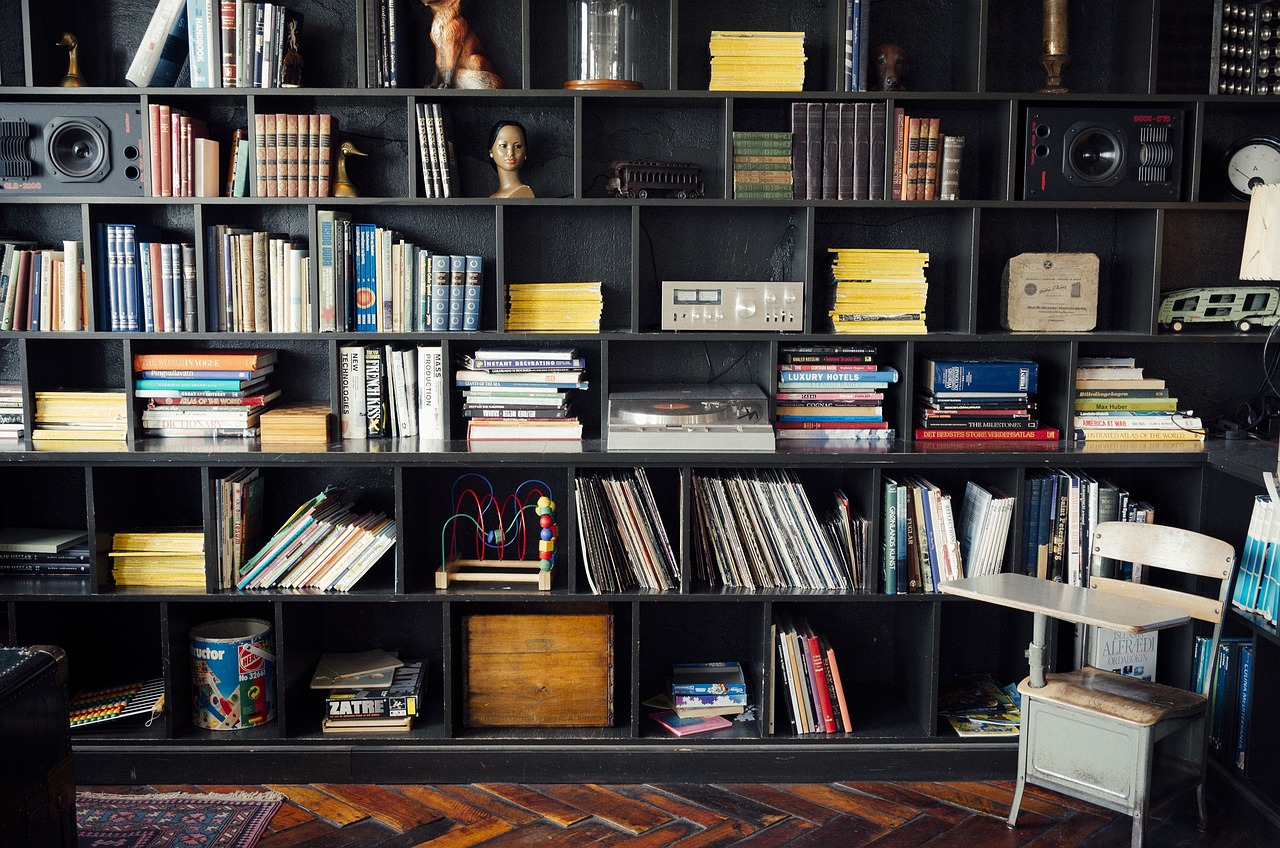
Somewhere you sit, not somewhere you store. A shelf in a spare room is an archive. A shelf beside a chair is a shelf you use.
Physical proximity does more for reading habits than any resolution.
Retire without ceremony
A book that has been on the shelf for two years unopened is telling you something. Move it to general storage or pass it on. The shelf works because it is short.
Second-hand shops, including ours, will usually take good-condition books off your hands.
Physical books hold a shelf together
A reread shelf works partly because the objects are visible. A book you own in print sits in the room and catches your eye; the same title on a device competes with everything else on that device and loses.
That is not an argument against reading digitally, which is excellent for books you will read once. It is an argument for buying the small number you will return to in a form that occupies space.
Let the shelf disagree with itself
A shelf where every book argues the same position stops being useful quite quickly, because rereading it only confirms what you already think.
Keep at least one title you find irritating or unresolved. Those are the ones that reward a second visit, and they are the ones most likely to have changed by the time you come back to them — which is to say, you will have.
A starting set for a reflective shelf
One Stoic primary text in a translation you like. One instructional book on a practice you actually do. One collection of essays or aphorisms. One prompt deck or notebook for writing rather than reading.
Four items, all in our shop, and enough to be going on with for years. Come and look — Floyd St, Overland Park, Tuesday to Sunday.
All notes
Browse the full range in the shop, read the frequently asked questions, or contact us — Monstera's Books, Overland Park, KS.